F&F Fiction: Perfection
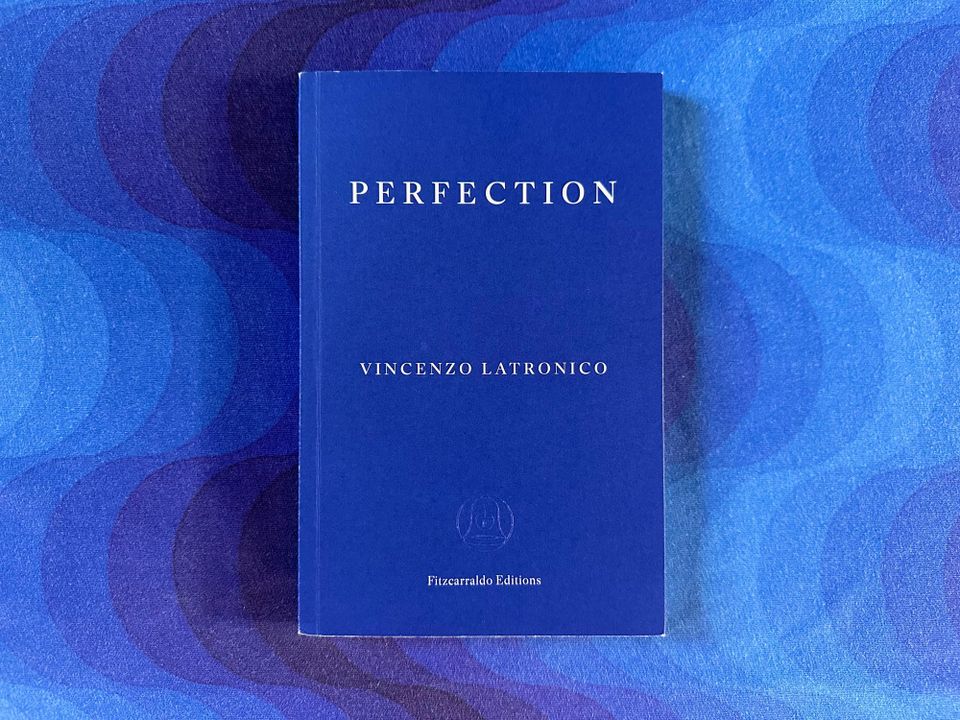
A dawning realisation settles as I finish reading Vincent Latronico’s Perfection (2025). The novel’s symbiotic protagonists are an emblem of our futile attempts to use our cultivated taste as an extension of ourselves. We seldom realise these outward displays have already been flattened by a pervasive digital culture and have formed into identikit neighbourhoods responding to the needs of global capital making every up-and-coming neighbourhood in every must-visit city into a simulacrum of a creative district.
Ostensibly set in Berlin in the early 2000s, Perfection has two principal characters introduced to us only as Anna and Tom. We only ever observe them as a pair because they are, in every respect, an amalgamated being. Anna and Tom think and act as one:
“They had a joint Volksbank account but separate Netflix profiles, although the algorithm suggested the same shows for both of them. Either of them could choose anything on their joint behalf — be it a dish from a menu or an apartment — without a second thought, confident that the other would like it.” — pg. 43
As Anna and Tom establish a life for themselves in Berlin. Each apartment in which they live, every gallery opening the visit, and in each café they dine, their experience blends into a morass — indistinguishable one from another. Anna and Tom’s story becomes a tour of desirable neighbourhoods before they become over-exposed — from Friedrichshain, Kreuzberg, to Neukölln and beyond. Once Anna and Tom begin to tire of Berlin, they extend their search for authenticity further afield.
We are introduced to Anna and Tom through the interior of their apartment. Our focus is drawn to their “turn-of-the-century luxury and raw modern grittiness” (pg. 13) — perhaps a commentary on the character they do not possess. In the same breath, we learn that their taste signals “freedom and decadence” leaving us to conclude that their personality is defined by how they materially express themselves. Their plants represent sociocultural markers of taste — peperomia, alocasias, monsteras, euphorbias, philodendrons — each symbolic of the millennial generation who have had their aspirations of home ownership afforded by a single income dashed, and the prospect of a dependable career and early retirement increasingly becoming distant fantasies. Anna and Tom represent a generation denied the opportunity to become stakeholders in cities on the cusp of speculative development that will soon price them out of their neighbourhood.
“Anna and Tom lived in a bubble, one even more insular and limited than those just starting to appear on social media. In a way, they had become radicalized. They spoke stumbling English with other non-native English speakers. They inhabited a world where everyone accepted a line of coke, where no one was a doctor or a baker or a taxi driver or a middle school teacher. They spent all their time in plant-filled apartments and cafés with excellent wifi. In the long run it was inevitable they would convince themselves that nothing else existed.” (pg. 67)
Anna and Tom’s existence is disembodied and isolated — “Berlin was, to all intents and purposes, their main pastime” (pg. 29). While they are voracious consumers of the burgeoning art, cultural, and nightlife scenes across Berlin, we soon realise their roots are shallow; their interactions with others merely transactional. Friends of Anna and Tom remain nameless as they come and go throughout the story — each interchangeable and forgettable (“Their group would expand and contract like a living breathing thing”, pg. 36). Anna and Tom have few German friends and lack any commitments that could bind them to their locale. It is telling that their catalyst to social justice is the result of a social media campaign about refugees in need.
Anna and Tom make their living as a result of accidental yet sequential steps that have coincided with the dawn of the Web 2.0 internet age, from a few hobby websites here and there to becoming remote digital designers. The internet made it easy for Anna and Tom to build a pipeline of work. Anna and Tom fit the description of what we now call digital nomads — a role encapsulating the post-2008 neoliberal dream of breaking free from the corporate cubicle unaware that the freedom promised to freelancers masks continued precarity as they compete in a globalised workforce for digital piecework to satisfy supranational clients that have little to no financial footprint in the cities they live and work, all while their rate stagnate or slowly fall — “… [their] working hours probably exceed those of an office worker—and yet, unlike in an office, here no one is counting hours, because in this life work plays an important role without being an obligation or burden” (pg. 17).
As it is with Anna and Tom, so it is with us — our roots in our chosen city have been made shallow. Our tenuous tenancies and the disintermediated ways of performing technology and service work have evolved — we are just as easily isolated, living with increasing reliance on phones to mediate our relationship to the neighbourhoods.
“… the working hours probably exceed those of an office worker—and yet, unlike in an office, here no one is counting hours, because in this life work plays an important role without being an obligation or burden. On the contrary, work is a source of growth and creative stimulation, the bassline to the tune of leisure.” — pg. 17
Anna and Tom are presented to us as ontological blank slates, giving us space to project our imagined visualisation of who they might be. Latronico, when interviewed for the Pages of Hackney podcast, commented that he purposely left Anna and Tom’s racial and cultural identities absent (1:00:51) — leading me to ponder whether Anna and Tom could be anyone other than White? The possibility of imagining a couple representative of having never experienced structural or socioeconomic disadvantage means we must face why we reflexively determine them possessing a cultural identity embodying Whiteness. The resulting internal unease at this ontological glitch we produce is more of a commentary on the media diet we consume from birth that racialises and structures our imaginative capacity in this regard.
We know nothing of Anna and Tom’s cultural identity because Latronico deliberately forbids them any dialogue. Everything we know about Anna and Tom is interpreted through the belongings they own, the places they go, and the food they performatively share:
“The most striking dishes would be photographed, tagged and shared. Those images would then travel to the other end of the planet, bouncing along in low Earth orbit or speeding across ocean ridges, reaching the screens of their peers in Lyon, Helsinki and Valencia, who would look at them for a moment, entranced by the differences” (pg. 60).
Anna and Tom’s cultural identity is absent because it is only visible to us through the gallery openings they frequent and the curated cultural experiences they try so hard to be seen experiencing and enjoying — from the collection of Taschen books on their bookshelves, to the expectation that they must experience the excesses of a Berlin sex club, before embarrassment and discomfort prematurely ends their foray — “in the end they always found themselves back in line for the coat room” (pg. 50).
At one point in the novel, the narrator comments on Anna and Tom’s observation, that “Gentrification, as they understood it, was something other people did” (pg. 66). The complexity of gentrification — a subject very much alive across neighbourhoods in every major European city — brings to the fore emotive concerns about who belongs and who is the late-comer responsible for driving up our rent, killing generations-old businesses, and ruining close-knit communities.
Anna and Tom have been in Berlin long enough to be able to resent anyone daring to consider settling after them — “They looked forward to Brandenburg Airport opening so they could reminisce about Tegel with the same cool superiority as the veteran expats who reminisced about their first flights into Tempelhof” (pg. 61) — but at some point, we must remember that every one of us was once a latecomer on the street we live. At some point, everyone of us will have looked askance at the new arrival on our street and wished them gone as we predict the death of our special little enclave that has so far resisted cultural homogenisation. It is the curse of the resident-manqué that they believe themselves having arrived at just the right moment — when the city was on the cusp of realising its most exciting and vibrant phase, and any subsequent settlers were the catalyst for turning the city into a gentrified Disneyland.
Perfection is a masterful fictional work. Latronico has reconstructed a vivid portrait of millennial disquiet whose foundations were once built on lucrative technology work in a liberalising globalised marketplace that afforded its adherents a degree of international mobility never deemed achievable. Latronico’s principal ideological dagger is pointed, but not at Anna and Tom — that would be too easy. No, what dawns on us as we see the effects of a precaritised digital nomad class who live individualised and isolated lives in cities where they cannot speak or understand the language surrounding them — is a neoliberal economic system that has produced a lifestyle that has disintermediated the capacity for its workers to garner a sense of belonging to the places they live and reduced our sense of community to transactional interactions mediated by social media and online technologies.
Perfection shines an uncomfortable beam on how the digitally connected class lives today, but in doing so its beam illuminates equally searching questions about the economic systems that have convinced us that no other viable options exist for constructing alternative ways of living in the cities we continue to call home.
Perfection by Vincenzo Latronico; translated into English by Sophie Hughes (Fitzcarraldo Editions, 2025, 120 pages)
More from Vincenzo Latronico
Perfection is published in English by Fitzcarraldo Editions in the UK. If you have already read it and want to explore more of Latronico’s auto-ethnographic writing, then I recommend reading Order Prevails in Berlin — an earlier essay originally published in Italian in 2023, now published in English in 2026 by The Architecture Foundation, translated by Sophie Hughes.
Listen
 Pocket Casts
Search Engine, 21 June 2024, 52 mins
Pocket Casts
Search Engine, 26 June 2024, 1 hour 10 mins
Pocket Casts
The Documentary, 26 December 2024, 28 mins
Pocket Casts
Cursed Objects, 9 October 2025, 16 mins
Pocket Casts
Code Switch, 4 March 2026, 33 mins
Further reading
- Why do rich people love quiet? by Xochitl Gonzalez (The Atlantic, 2022)
- Bad Taste: Or the Politics of Ugliness by Nathalie Olah (Dialogue Books, 2023, 240 pages)
- Filterworld: How Algorithms Make Everything the Same by Kyle Chayka (Heligo Books, 2024, 304 pages)
- At Gail’s, what is the human cost behind a £5 loaf of bread? by Sasha Patel and Ben Jacob (Vittles, 2025)
- From Hackney With Love: An Intimate History of Gentrification by Richard Yeboah (Biteback Publishing, 2025, 228 pages)
- Gentrification Is Inevitable and Other Lies by Leslie Kern (Verso, 2025, 256 pages)
- Guest review: Bad Taste by Michaella Parkes (First & Fifteenth, 2025)
- Guest review: Bad Taste by Michael Kibedi (For Starters, 2025)
- #7: Perfection by Salome Wagaine (Critmas, 2025)
And finally...
⚠️ Sign the petition to save The Artist’s Garden (nothwithstanding change.org’s aggressively manipulative UX) located above Temple tube station — the world’s first and only public sculpture garden dedicated to the work of women artists — an important corrective addressing the lack of diversity in our public realm. Open since 2021, this free open air exhibition space attracts over 100,000 visitors each year. The Artist’s Garden is now under the threat of eviction.
🇦🇹 I will be speaking on day 1 of uxcon vienna (16-17 September). My talk is called Whose English gets to be default? and is about accent bias and speech recognition. Tickets available now. Use my personal code MICHAELUXCON to get 10% off!
🇮🇹 Sunday 20 September – Thursday 1 October, I will be part of the 2026 cohort at Residenza Lago Scuro, a self-directed interdisciplinary residency at Cascina Lago Scuro — a regenerative farm near Cremona in Italy. Over 12 days, the farm will become a home, studio, workspace, and inspiration for us, as its 11 global creative residents. I will use my time to explore new ways of expressing my work and evolving my design research practice. Consider this groundwork for the next phase of First and Fifteenth!
🗞️ In my last newsletter, Fifteenth #20: On algorithmically aggravated addiction with Dr. Romy Gad el Rab, I was just ahead of the official announcement about Romy’s new show so I couldn’t publish too many specifics. Anyway, the press release has just been published, so I can now encourage you to visit Compulsory Continuous Connectedness: rest in a networked world by Caroline Sinders and Romy Gad el Rab at Focal Point Gallery in Southend-on-Sea. The exhibition is on from Wednesday 30 September 2026 until Saturday 9 January 2027.
🇳🇱 NEW EVENT ANNOUNCEMENT! Wednesday 2 – Friday 4 June 2027, I will be chairing a track called “The Politics and Practice of Refusal: Technology, History, and Alternative Futures” at ETHICOMP, an inclusive international conference discussing ethical, social, political, and philosophical questions concerning technology. The 2027 conference’s theme is “Tech Shaping Lives” and will be at the Faculty of Arts and Social Sciences (FASoS) at Maastricht University. The Call for Papers opens on Tuesday 1 September 2026.
📣 I have a chapter in the forthcoming essay collection Digital Design for Planetary Care: The Hidden Environmental Cost of the Digital World co-edited by Professors Elio Caccavale and Gordon Hush. The book will be published by Bloomsbury Visual Arts in summer 2027.
💳 If you like what you have read, please consider supporting my independent practice with a one-off £10 donation. That will be a welcome contribution towards the ongoing costs of keep this website running!
📚 You can buy books mentioned in this newsletter from my page on Bookshop.org (affiliate link)
🗄️ Editions #1–15 of First & Fifteenth were published from 2023 until 2025.