First # 19: Natural Connection
Technology is manufactured — chemically intensive and extractive processes are deployed to transform raw materials into sophisticated digital devices. Technology demands control — complex infrastructures transmit our data around the world at light-speed using servers housed in datacentres isolated in dust-free, temperature and humidity controlled environments. Technology dominates — for digital product, data, and software standards to be universally adopted requires corporations that can enforce their ideological, regulatory, and market dominance to guarantee adoption. Technology is by and for all — yet the origin of its design canon emerges from a specifically situated time and place: that of an early twentieth century European Modernism tasked with expressing colonial dominance through the designed object.
In contrast, the response to the environmental emergency is primarily framed as coordinating individual action to take effect in far away places. For those of us living in the industrialised nations of the Global North, environmentalism is a movement for fixing the rainforests, mountains, and oceans. The people inhabiting such far-away places are exoticised and excluded from the paternalistic interventions orchestrated at a global scale that inevitably follow to address the polycrisis.
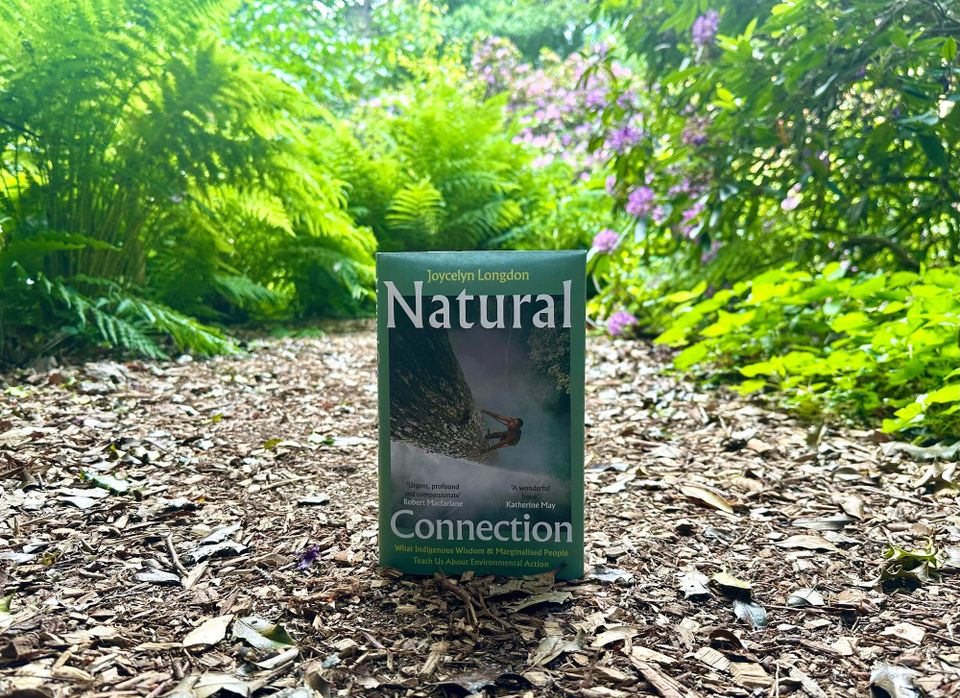
Natural Connection (2025) by the environmental justice researcher Joycelyn Longdon is a book urging us to rethink our relationship to the planet and look beyond the restrictive pedagogies that have instructed how we work with technology, create and share knowledge, and formulate strategies for radical planetary interventions.
We encounter the word ‘radical’ early on, and it is an important term underpinning this work. Longdon opens Natural Connection by explaining “the word ‘radical’ is born from radix, the Latin word for root” (pg. 3) — a well-placed opening because in both environmental and technology work, radicalism is frequently co-opted but seldom understood. Innovation under capitalism demands novelty and domination of the means of production and its associated labour — a system that favours the economies of the Global North, but in Natural Connection we are introduced to practitioners, campaigners, and innovators from many parts of the world who situate their modes of enacting transformative change in full acceptance of the entanglement they have with their surroundings.
Metaphors illustrating our entangled existence abound throughout Natural Connection. While we may have been schooled to conceptualise technology, design and ecology as unconnected planes, Longdon’s deeply researched and clearly articulated prose ideologically braids these subjects to reveal how closely they are each intertwined. By its conclusion we have a reconstructed understanding of our existence in the world in relation to the many beings surrounding us.
Six roots
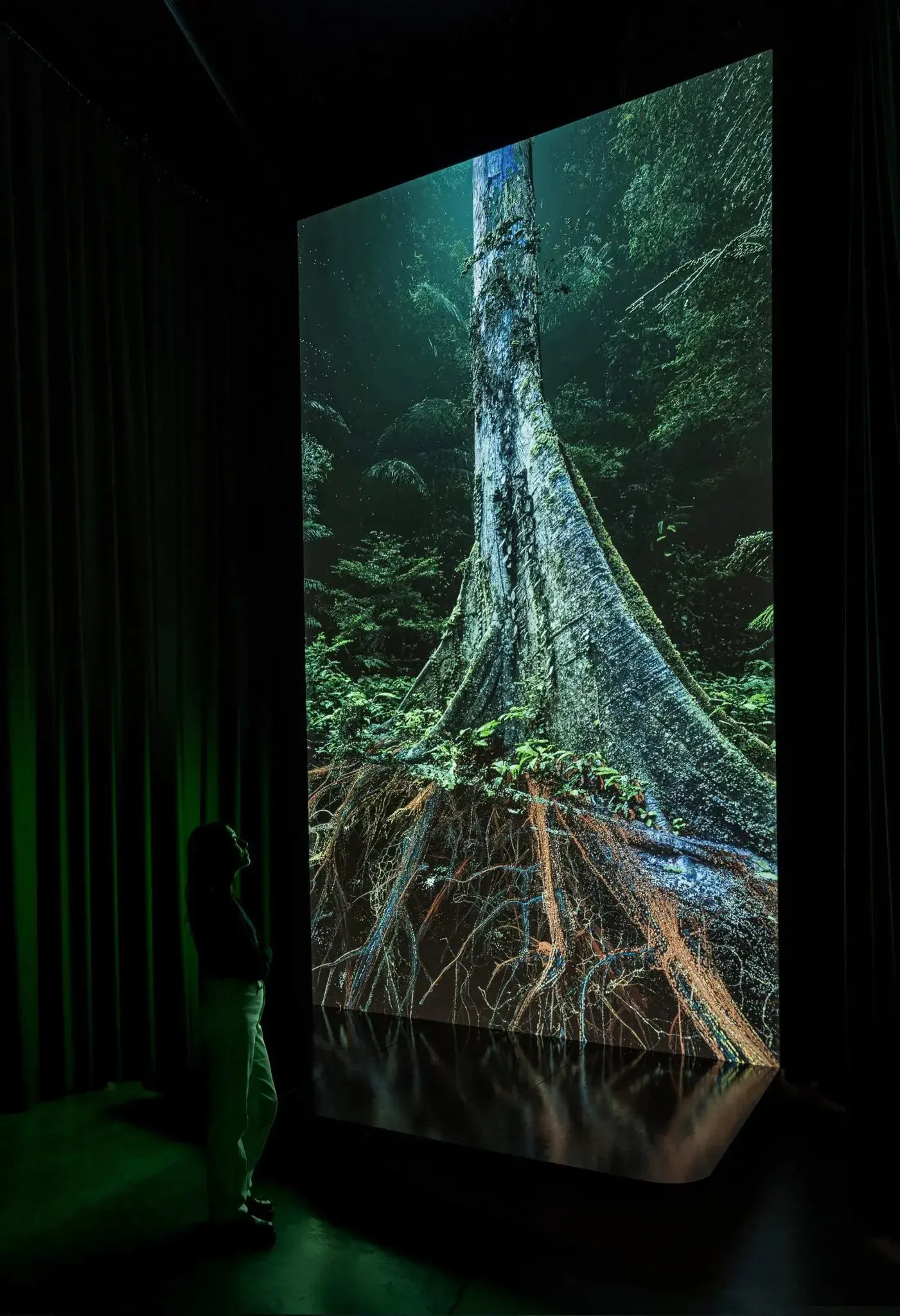
Roots are an important refrain in Natural Connection. In our current technofascist turn — as the billionaire leaders of the technology industry align themselves with dominant patriarchal political forces in service to capital, geopolitical and supply chain dominance — we are well placed to internalise the possibilities of what malevolent imagination can do, and the destruction it can wreak. Longdon counters these dawning realities by explaining:
“Our roots — the cultural, historical, physical and spiritual connections we have with each other and the rest of the living world — have the potential to lead us to pain and suffering, but they can also transport us to the thriving futures we envisage.” — Natural Connection, pg. 3
And this is the crux of radicalism captured by Natural Connection. The trajectory of this current technological age progresses in a direction and at a pace we struggle to redirect or restrain — we must cultivate the determination to imagine and think beyond our current moment to bring into being the “thriving futures” we believe can happen. So how can these ideas be realised?
Longdon unfurls her thinking through “six alternative roots we can grow to create a natural connection between ourselves and the living world” (pg. 9) using vignettes that combine insights from her empirical and academic research, interviews, and observations. The resulting book is one that has a well-rounded and solid foundation — copious data is cited, observed practice is proven, personal testimony is recounted and reified. For these reasons, Natural Connection is a data-driven, empirical, and testimonial document well-placed to rebut the inevitable complaints aimed at a book daring to imagine otherwise.
Rage
In the first root, we are introduced to RAGE, because we must allow ourselves to channel and direct this ire towards the powerful actors that have, and continue to, sponsor the destruction of the planet. Longdon writes “Rage is often discounted as an emotional drive and termed unstable and irrational” (pg. 53), and such denigration of emotion is a common rebuttal to silence protest — particularly those of women and the marginalised communities. From the Warren PCB Country protests to the women of the Chipko Movement whose actions resulted in the pejorative ‘treehuggers’ — we witness how rage can motivate and propel us to climate action.
Imagination and Innovation
The next two roots echo terms with which any technology worker will be all too familiar — IMAGINATION and INNOVATION. Whether in a startup, during a hackathon, or embedded in a stealth innovation lab, we have internalised the technocultural rules of the people who are qualified to lead use their imaginations and where such innovative activities can take place. Longdon is determined to liberate these terms from their corporate and pedagogical strictures, and in these two sections we are challenged:
“Only by untethering our minds from the limits of an underdeveloped, arrogant and penetrating colonial imagination can we escape the grip of social and ecological catastrophe.” — Natural Connection, pg. 85
Imagination is the ability to think of futures existing beyond the billionaire-backed fantasies of inaugurating the networked state or extending colonial expansion to outer space. Longdon writes “Colonisation and capitalism are holding our imagination captive” (pg. 78), so our imagination begins with ongoing acts of decolonisation. It means reacquainting ourselves with Indigenous knowledges — “From Brazil to Indonesia, Britain to Kenya” (pg. 86) — and decentering the primacy of innvoation predicated on continuing dominant modes of Western capitalist extraction.
Decolonial imagination means engaging with texts emerging from knowledge traditions outside of the Anglo-American-Euro spheres — from Afrofuturists to Africanfuturists — that confront the implacable question of how slavery and racial capitalism are inseparable, and that their confrontation must be the basis for any imagination claiming to think otherwise beyond this techno-optimist age.
“To renew the world isn’t always about making things new things, but allowing the past to help us see, think and live in new ways” — Natural Connection, pg. 122
Building on this, we can innovate to reject the patriarchal urge to use world building to impose one cultural standard over another in a bid to reorder the objects and entities inhabiting our world.
Theory
Natural Connection’s narrative strength is evident throughout, but it is in its fourth section that Longdon sets out the book’s theoretical framing. Academic and scientific THEORY of the past has done much to sponsor, prosecute, and disseminate historical crimes against African and Indigenous communities. It is also common for many engaged in radical or liberatory thinking to reject the suggested imposition of a theoretical orthodoxy.
Recent literature and thinking emerging from feminist scholars in particular — reappraising texts like Sojourner Truth’s Ain’t I A Woman — have defended emotion and lived experience as a recognised form of knowledge.
Longdon’s position is that “theory allows us not only to name the source of pollution and the pain it is causing, but the systems that enable the destruction to take place in the first place” (pg. 162), and this is the reason why the theoretical underpinning of Natural Connection is so important. By providing this narrative frame, theory bridges the emotion channelled into action towards wider ecosystemic confrontation, and by establishing a clear theoretical understanding, we emerge equipped to confront the systems and actors that have sponsored these ecological harms.
Healing and Care
Trauma exists in the Earth, and whether through the lasting effects of the innovative futures promised by the Green Transition, or through the residues remaining in the geological formations testifying to the collective grief that the planet endured through the birth of the Plantationcene — it is clear that a forward-facing interest in realising the vision of Natural Connection rests on the twin roots of HEALING and CARE. In Longdon’s reckoning, we heal as a way of acknowledging our — humankind’s — collective grief, regardless of our positionality or geographical connection to TransAtlantic geographies.
“Indigenous, Black, Brown, Pacific and East Asian communities, amongst many, are suffering the ongoing repercussions of enslavement, colonisation and imperialism. Living in areas that are overwhelmingly devoid of nature and overwhelmingly plagued by pollution. Witnessing their ancestral lands acquired for oil production, property development, industrial farming, mining and waste incineration. Or desperately wanting to reconnect with their traditional lands that they are now barred from entering without paying a fee.” — Natural Connection, pg. 229
Across the world, the plantation and its machinations are not black and white etchings of a distant land or forgotten past, but rather it is a spectre persisting to poison the airs of our present.
Natural Connection finishes with a reclamation of CARE. In our increasingly individualised lives, where care has been commodified and turned into a saleable commodity in self-care, Longdon shares with us that “experiencing an organic, mutualistic care infrastructure in my late twenties was an embodied lesson of the politics of care” (pg. 254). This reflection resonates powerfully, particularly because we are assaulted with messaging to declare who in society is deemed valuable and who are calculated to be burdens. The demonisation of migrants — often victims of environmental racism and the reverberating aftershocks of colonial meddling — are visible reminders of how care is selectively distributed when its organising principles are individualism and the profit motive. Care offered by one person to another, is reduced to a transactional exchange:
“As the climate crisis worsens, investing in strong, resilient social and environmental care systems will become crucial to our collective survival and flourishing. Rapid and radical investment in our care infrastructures will only become more important as we move towards an economy that is decoupled from carbon.” — Natural Connection, pg. 274
In Longdon’s imaginings, a future defined by collective care treats the climate crisis as a threat that affects all — regardless of borders or social standing. The polycrisis will not be solved by AI, or by a chosen technological masterclass decamping to Mars. We will survive by remembering, reviving, and “remaining rooted” (pg. 277) in the harmonious ways of living and being that Indigenous communities have practiced for thousands of years.
Tap. Tap. Tap.

Business loves metrics — we satiate our consciousness by achieving balanced sustainability scorecards without confronting the extractive business models that remain undisturbed. For the concerned technology worker, our individual capacity to confront our unjust technologically mediated atrophy when confronted by concurrent atomisation and precaritisation of our labour. Despite these discouraging signals, Longdon urges us to look inwards before setting out the vision for Natural Connection, that it is:
“… a book about acknowledging and deeply embodying your existence as a being who is but one strand woven into the infinite tapestry of the living world.” — Natural Connection, pg. 9
“Tap. Tap. Tap.” (pg. 290). The sound of the rain hitting the windows of the car that Longdon recounts in the epilogue, as she drives towards Accra in Ghana. Natural Connection has the capability to have a transformative effect on its readers — it is a book that is having a long lasting effect on my thinking, practice and ways in which I frame my writing.
The short chapters and accessible language belie the depth of research, empiricism, and theory underpinning the complexities of its message. Ideas are gradually layered as we progress through its six sections. Written with an academic rigour, Longdon’s concrete poetry visibly illustrates some of the text’s most poignant notes (pg. 73, 99, 186, 223, 290, 298). The rhythmic beat of the text is quite different to those running through comparable works on environmental action — reminding me of The DISCO Network writing in Technoskepticism (2025), that “Blackness moves at a different pace from Western modernity” (pg. 141).
Natural Connection takes its readers on journeys spanning many continents — Longdon’s PhD research was concerned with exploring how bioacoustics can be used to aid forest conservation in Ghana — grounding recent historical understanding of environmental protest in the Warren County PCB protests in the USA (pg. 22) and the Ogoni 9 in the Niger Delta (pg. 33), to the symbiotic existence the Khasi people in Meghalaya state have innovated through the growth of living root bridges — natural timber structures growing from the roots of Indian rubber trees to span great ravines (shown above).
Centuries-old Indigenous practices continue to inspire modern designers today — repackaged as regenerative design — and Natural Connection reminds us, that although separated geographically and culturally, through the many forms Indigenous technologies take, they have lost none of their capacity for harmonious coexistence — demonstrating that the technologies of the rainforest can be just as potent in reimagining the future technologies of the metropolis.
Natural Connection: What Indigenous Wisdom & Marginalised People Teach Us About Environmental Action by Joycelyn Longdon. Published in 2025 by Square Peg in the UK and in 2026 by Princeton University Press in the USA, 352 pages.
More from Joycelyn Longdon
Joycelyn Longdon, PhD (University of Cambridge) describes her research interests as being concerned with “the design of justice-led conservation technologies for monitoring biodiversity with local forest communities in Ghana”. Joycelyn’s website is a comprehensive record of the work she is currently doing, which includes running the Climate In Colour educational program, along with developing an extensive speaking career.
Listen
 Pocket Casts
Green Dreamer, 5 April 2022, 42 mins
Pocket Casts
Thunderstorm, the Osa Peninsula, Costa Rica on 22 May 2022 — by Ted White, 3 March 2023, 2 mins
Pocket Casts
Green Dreamer, 20 August 2024, 37 mins
Pocket Casts Pocket Casts
Cultures of Energy, 11 April 2025, 1 hour 3 mins
Pocket Casts
Black Earth, 27 August 2025, 54 mins
Further reading
- An Indigenous Feminist's Take On The Ontological Turn: ‘Ontology’ Is Just Another Word For Colonialism by Zoë Todd (Academic Freedom and the Contemporary Academy, vol. 29, no. 1, 2016)
- Pedagogy of the Oppressed by Paulo Freire (Penguin Modern Classics, 2017 reprint – first published in English in 1970, 160 pages)
- Black Feminist Ecological Thought: A Manifesto by Chelsea Mikael Frazier (Atmos, 2020)
- The Church Forests of Ethiopia by Jeremy Seifert (Emergence Magazine, 2020)
- The ESG Mirage by Cam Simpson, Akshat Rathi, and Saijel Kishan (Bloomberg, 2021)
- The Long Shadow Of Colonial Science by Sria Chatterjee (Noema, 2021)
- Undrowned: Black Feminist Lessons from Marine Mammals by Alexis Pauline Gumbs (AK Press, 2021, 120 pages)
- How To Develop A Planetary Consciousness by Achille Mbembe (NOEMA, 2022)
- To achieve racial justice we must rebuild the world – and save the planet by Aaron White and Olúfẹ́mi O. Táíwò (openDemocracy, 2022)
- Locating Blackness In Intimate Ecologies by Ama Josephine Budge (C&10, 2023)
- On sensual futuring by Ouassima Laabich (Ding, issue 5, 2023)
- Radical Futurisms: Ecologies of Collapse, Chronopolitics, and Justice-to-Come by T. J. Demos (Sternberg Press, 2023, 224 pages)
- Justice-oriented Design Listening: Participatory Ecoacoustics with a Ghanaian Forest Community by Joycelyn Longdon, Michelle Westerlaken, Alan F. Blackwell, Jennifer Gabrys, Benjamin Ossom, Adham Ashton-Butt, Emmanuel Acheampong (CHI '24: Proceedings of the 2024 CHI Conference on Human Factors in Computing Systems, 2024, Article No. 560, pages 1-12)
- Digital Degrowth: Radically Rethinking our Digital Futures by Neil Selwyn (Polity Press, 2025, 137 pages)
- Putting the Law on Trial: On the Court for Intergenerational Climate Crimes, Serpentine Galleries by Theresa Zwerschke (Framer Framed, 2025)
- Design Beyond the Human: Transdisciplinary Conversations about the Planet edited by Elio Caccavale and Gordon Hush (Bloomsbury Visual Arts, 2026, 326 pages)
- Incomputable Earth: Technology and the Anthropocene Hypothesis edited by Antonia Maraca (Bloomsbury Academic, 2026, 520 pages)
And finally...
🇬🇧 Tomorrow (Tuesday 2 June) UX London begins, where I will deliver the keynote to close Discovery Day — the first of its three days.
🏴 In just under two weeks, I will be opening day 2 of UX Scotland from Wednesday 10 to Thursday 11 June. My keynote is called a firmament inside, and is a conceptual art and poetics led examination of how self-imposed constraints curb our capacity for enacting systemic change. Tickets available now (discounts for freelancers; scholarships also available).
🇦🇹 I will be speaking on day 1 of uxcon vienna from Wednesday 16 to Thursday 17 September. My talk is called Whose English gets to be default? and is about accent bias and speech recognition. Tickets available now. Use my personal code MICHAELUXCON to get 10% off!
📣 I have a chapter in the forthcoming essay collection Digital Design for Planetary Care: The Hidden Environmental Cost of the Digital World co-edited by Professors Elio Caccavale and Gordon Hush. The book will be published by Bloomsbury Visual Arts in summer 2027.
💳 If you like what you have read, please consider supporting my independent practice with a one-off £10 donation. That will be a welcome contribution towards the ongoing costs of keeping this website running!
📚 You can buy any book featured in this newsletter from my page on Bookshop.org (affiliate link)
🗄️ Editions #1–15 of First & Fifteenth were published from 2023 until 2025.